PhD Candidate · Computing · Boise State University

Meherunnesa Tania

I design AI that children can trust and parents can stay part of. I build and study conversational agents for kids, co-designed with children: technology made with them, not just for them.

Email: meherunnesatania@u.boisestate.edu

ChatKid prototypeillustration
Child, age 8Why do cats purr?
ChatKidCats often purr when they feel happy and safe, like a little motor of good feelings! Scientists think it can also help them feel calm.
Parent guideAsk your child: what makes them feel calm? A great question to explore together.
Answers for kids, with a visible role for the grown-ups.
6publications since 2021
ACM IDC · CSCWtop HCI venues
5 yearsteaching computer science
HCI + MLdesign research and deep learning

About

I'm a PhD Candidate in Computing at Boise State University, focused on Human-Computer Interaction and Human-AI Interaction. I work in the KidsTeam Lab with Dr. Jerry Fails, where children join our research as design partners.

Children are already asking AI systems their questions, and most of those systems were built for adults. My research explores how conversational agents can be designed to support children and families: answering kids' curiosity safely, keeping parents meaningfully involved, and protecting a child's own sense of agency.

I care about technology that is useful, understandable and human-centered. That conviction comes from experience: before my PhD, I spent three years teaching computer science at universities in Bangladesh, and I've published work in deep learning and NLP alongside my HCI research. I bring both sides to every project: the technical skill to build AI systems, and the design methods to make sure they actually serve the people who use them.
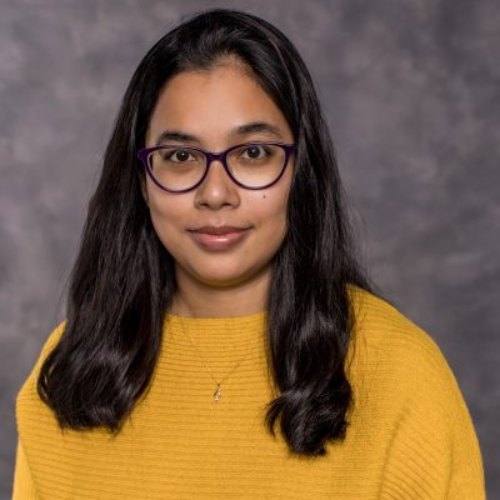
Portrait of Meherunnesa Tania
NowPhD Candidate, Computing (CS), Boise State · expected 2029
LabKidsTeam Lab · Advisor: Dr. Jerry Fails
FocusChild-AI interaction, conversational agents, family-centered AI, XR
MethodsParticipatory design, co-design with children, user studies, prototyping
Open toResearch roles in academia and industry: HCI, UX research, responsible AI

News

Research

Three questions guide my work.

Child-centered AI
What should a conversational agent built for children actually do?

Designing chatbots around children's curiosity, language and safety needs, instead of adapting adult tools.

Agency in families
How do children, parents and AI share control?

Studying child-AI-parent interaction so parental support stays visible without overriding a child's own voice.

Emerging technology
How do families see children's future with XR and AI?

Gathering perspectives from parents, professionals and siblings to inform responsible design of new technology.

How I workParticipatory designCo-design with childrenFocus groupsInterviewsSurveysPrototypingUser evaluation
Where my research is going

As AI moves from answering questions to taking actions, children need systems that are transparent about what they remember, what they can access, and what they do.

My goal is to define what child-centered, family-aware AI agents should look like, combining co-design with children, studies with parents, and working prototypes, so the next generation of AI strengthens parent-child relationships instead of replacing them.

Selected projects

Each shows the research contribution and the skills behind it.

Conversational AI2026

ChatKid: a child-centered AI chatbot

A chatbot prototype that answers children's everyday questions with built-in safety boundaries and visible, parent-guided support. Interaction features were shaped through participatory design sessions with children.

Research contributionA design for family-centered AI that keeps parents involved while preserving children's agency. Presented at a CSCW 2026 workshop.
Skills shownEnd-to-end prototyping of an LLM-based product, co-design facilitation, safety-aware interaction design.
Conversational AIParticipatory designPrototypingChild safety
Wearables · Co-design2025

Soul Support: hopeful wearables for children's emotional wellness

A wearable concept co-designed by children aged 6 to 11 with adults: a sensor wristband and necklace that activate a digital assistant offering affirmations, calming media, advice or jokes based on the child's emotional state.

Research contributionPublished at ACM Interaction Design and Children (IDC 2025). Shows how children envision support that feels helpful, not intrusive.
Skills shownCo-design with children, concept development, collaborative research in a multidisciplinary team.
Co-designWearablesEmotional wellbeing
Stakeholder research2026, ongoing

Children, XR and AI: what adults expect

Focus groups with parents, professionals and older siblings from urban and rural communities, responding to scenarios of future XR and AI use by children aged 5 to 12, then discussing risks, benefits and expectations.

Research contributionPart of a multi-university effort to understand how families view children's engagement with emerging technology.
Skills shownQualitative study design, scenario-based focus groups, working with undergraduate researchers.
Focus groupsQualitative researchXRAI
Deep learning · Health2026

Alzheimer's severity assessment from MRI

A dual-branch deep learning model combining EfficientNet-B3 and ResNet50 with channel, spatial and self-attention, classifying MRI scans into four dementia severity levels.

Result98.21% test accuracy, outperforming ResNet50 (93.68%), VGG16, DenseNet121 and other baselines. Published in Emerging Science Journal.
Skills shownComputer vision, attention mechanisms, model benchmarking, medical imaging data.
PythonCNNsAttentionMedical imaging
Machine learning · NLP2024

Mapping the LLM research landscape

Automated classification of academic survey papers on large language models into taxonomy categories. Exploratory analysis revealed publication trends over time; TF-IDF text features and a Random Forest classifier then predicted each paper's category.

Research contributionA sole-author study offering a data-driven view of LLM research topics and trends.
Skills shownText classification, NLP pipelines, trend analysis, independent research.
PythonTF-IDFRandom ForestData analysisNLP

Publications

Full list on Google Scholar.

  1. 2026
    Attention-Driven Hybrid Deep Learning for Automated Alzheimer's Disease Severity Assessment via MRI Neuroimaging
    Suman Ahmmed, Ohidujjaman, Mahimul Islam Nadim, Zahura Zaman, Md Mizanur Rahman, Abdullah Al Taky, Meherunnesa Tania, Ikteder A. Udoy, Khadiza Khanom, Md. Obaidul Islam
    Emerging Science Journal, 10(3), 1454–1472Link
  2. 2026
    Parenting in the Digital Age: Urban Parents' Perspectives of Children's Engagement with XR and AI Technologies
    Tenneh Kanneh, Meherunnesa Tania, Samjhana Pokharel, Jerry Alan Fails
    Boise State UniversityLink
  3. 2026
    Adult Stakeholders' Perspectives of Children's Engagement with XR and AI Technologies
    Tenneh Kanneh, Meherunnesa Tania, Samjhana Pokharel, Jerry Alan Fails
    Boise State University Undergraduate Research ShowcasePosterLink
  4. 2025
    Soul Support: Designing Hopeful Wearables for Children's Emotional Wellness
    Bhargavi Rao Bondada, Shrutee Dwa, Upama Thapa Magar, Jerry Denning, Meherunnesa Tania, Jerry Alan Fails
    Proceedings of the 24th ACM Interaction Design and Children Conference (IDC 2025), Reykjavik, Iceland, 1163–1165DOI
  5. 2024
    Automated Classification and Trend Analysis of Large Language Model Survey Papers Using Machine Learning and Natural Language Processing Techniques
    Meherunnesa Tania
    OSFPreprintLink
  6. 2021
    Image Recognition Using Machine Learning with the Aid of MLR
    Meherunnesa Tania, Diba Afroze, Jesmin Akhter, A. Rahaman, I. Islam
    International Journal of Image, Graphics and Signal Processing, 13, 12–22Link
Workshop presentation · Oct 2026 · Salt Lake City, UT

ChatKid: A Child-Centered AI Chatbot Prototype for Supporting Children's Questions with Parent-Guided Support

CSCW 2026 Workshop: Growing Up (and Old) with AI: Co-Constructing the Future for Family-Centered AI. Presented in person.

Experience

2024–present

PhD Researcher, KidsTeam Lab

Boise State University

HCI and child-computer interaction research with children as design partners. Design and evaluate child-centered AI and conversational-agent prototypes; plan and run user studies.

2024–present

Teaching Assistant, Computer Science

Boise State University

CS 121 and CS 221: grading, preparing course materials, and helping students master course concepts.

2021–2024

Lecturer, Computer Science

Green University of Bangladesh · Daffodil International University · Dhaka International University

Taught undergraduate CS courses through lectures, assessments and academic advising.

Service

Service and professional development

Peer reviewer for IEEE conferences and journals. Participant, Ethics and Emerging Technology Research Summit, Meta, Seattle, 2025. Mentee, CSCW 2026 early-career mentoring event. Attended the AWS "Secure AI Agents on Amazon EKS" hands-on workshop and the CRA-E Career Landscape Workshop, 2026.

Skills

Research methods
Participatory designCo-designUser studiesSurvey designInterviewsFocus groupsObservationUser evaluation
AI and machine learning
Conversational agentsDeep learningComputer visionNLPText classificationClassical ML
Programming
PythonJavaScriptJavaC++C
Education
  • 2024–2029 (expected)Ph.D. in Computing (Computer Science)Boise State University
  • 2019–2020M.Sc. in Computer Science & EngineeringJahangirnagar University, Bangladesh
  • 2015–2019B.Sc. in Computer Science & EngineeringJahangirnagar University, Bangladesh

Let's talk

I'm open to research collaborations, internships and conversations about child-centered and family-centered AI.

meherunnesatania@u.boisestate.edu